
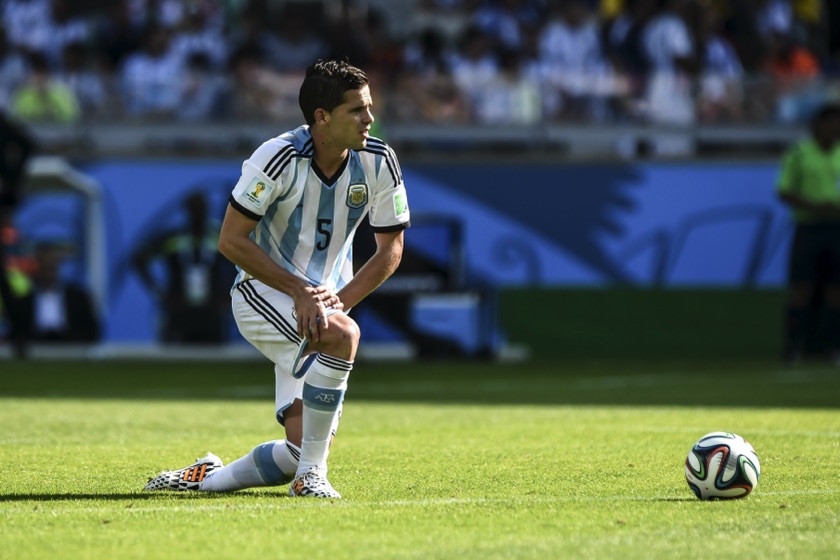
You’ve just played 5,500 minutes of football for your club and country between August and May. And, rather than getting the summer off to relax on a beach of suitably tropical proportions, instead you’re off to represent your country in what is, arguably, football’s most pressurised environment.
All eyes are on the players at the World Cup, where the line between success and failure seems to narrow with each passing of the quadrennial tournament. Score a goal, make a great save, defend valiantly… hero status is assured.
Miss a penalty or make a game-changing mistake… and it could have an impact on your entire career. Now take that accumulative fatigue and that mental pressure and put it in the meteorological oven that is the North American summer – temperatures won’t drop below 30 degrees in some of the host cities in the United States and Mexico in particular.
Oh, and did we mention the altitude? Try and perform to your best when you’re 2,000 feet above sea level and the air is at its thinnest. How will World Cup 2026 be remembered? Hopefully not as the tournament at which the players were out on their feet.
Feeling Les Bleus
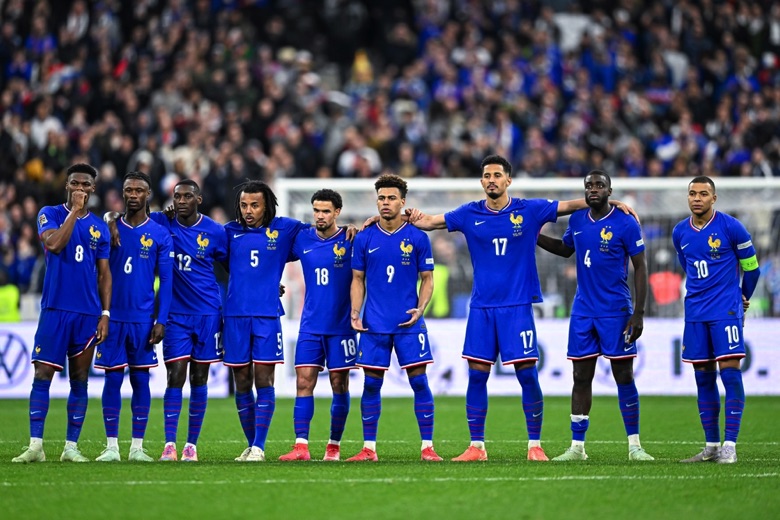
France are many pundits’ pick to lift the iconic trophy in July. But Les Bleus are facing a major problem: their players contested more minutes of football than any other nation at the World Cup during the 2025/26 season.
They combined for 98,895 minutes last term… in excess of 2,000 more than any other World Cup squad. Portugal (96,405) and England (94,403) are second and third on the list, with the success of their players in domestic and continental competitions – more games equals more minutes, for the most part – being just one of the factors behind their workload.
Five players started at least 60 games for club and country: Virgil van Dijk, whose 5,661 minutes played is the highest of any individual at the World Cup, taking his place at the head of the standings from Leo Pereira and Vinicius Jr (both Brazil), Vitinha (Portugal) and Brandon Mechele (Belgium).
Asking these players to produce their best football, at the end of such a punishing campaign, under pressurised circumstances and in high temperatures and/or altitude, does not exactly seem conducive to elite sport.
What Is the Red Zone in Football?
Of course, so deep runs data analytics in football these days, all of the players at the World Cup will be closely monitored. Rather than just examining minutes played during 2025/26, analysts and medical staff will examine other key indicators of fatigue and below-par health, using those GPS tracker vests that all top-level players wear under their shirts:
- Acceleration speeds
- Heart rate
- Blood markers
- Recovery times
- Hydration levels
- Sleep quantity/quality
All of this information is then fed back to the head coach, who is potentially left with the unenviable decision: should I rest my star player if their physical data suggests I should? Of course, the team that goes on to win the World Cup will, at some point, rest players and rotate their squad – how else will they be able to get through eight games in the space of five weeks?
While accumulative fatigue can impact performance levels, it also brings another potentially calamitous side effect: vulnerability to muscle injuries increases. This is generally known within elite sport as the ‘red zone’. Players that cross this threshold are scientifically more likely to suffer a hamstring, quad or calf strain than somebody who is will rested.
But in the key games, a head coach will – in some cases – be governed by their heart rather than their head, playing key players in the hope that they can just get through another match… red zone or otherwise. It’s not an effective way for any high-level sport to operate, but heading into the pinnacle of international football that is the World Cup?
Surely something has to be done if we want to see the best players on the planet deliver their finest performances on the biggest stage of them all. Football matches should be won on the pitch… not in ice baths and oxygen chambers.
World Cup Heat, Altitude and Travel Burden
Heat and altitude are also likely to be huge factors going forward in countries that have hot summers. It goes without saying that high temperatures, whether dry and sunny or humid and sweat inducing, have a huge impact on the human body’s ability to perform at the highest level.
A lack of hydration can lead to both physical and psychological tiredness, as well as putting the cardiovascular system under incredible strain. Heat can lead to muscle cramping – expect plenty of stoppages late in games at the World Cup as players hit the deck in agony clutching their calf muscles.
The high altitude of some of the host venues will also be a key factor. The ‘thin’ air makes it more difficult to get oxygen on board – around 25% less per breath, which not only impacts immediate performance but recovery too.
And when you put heat and altitude together, the effects of both are enhanced exponentially. Dr Neil Clarke, an associate professor of sports science at Birmingham City University, has revealed that players should ideally be given weeks to acclimatise to high altitude. He commented:
But that’s not really possible in a tournament where teams are moving between different locations. In reality, they’ll often have to fly in, play and move on.
The physical aspect is important, but so is the cognitive side. As blood glucose falls and players become fatigued, decision-making can become impaired. That can influence positioning, concentration and tactical choices.
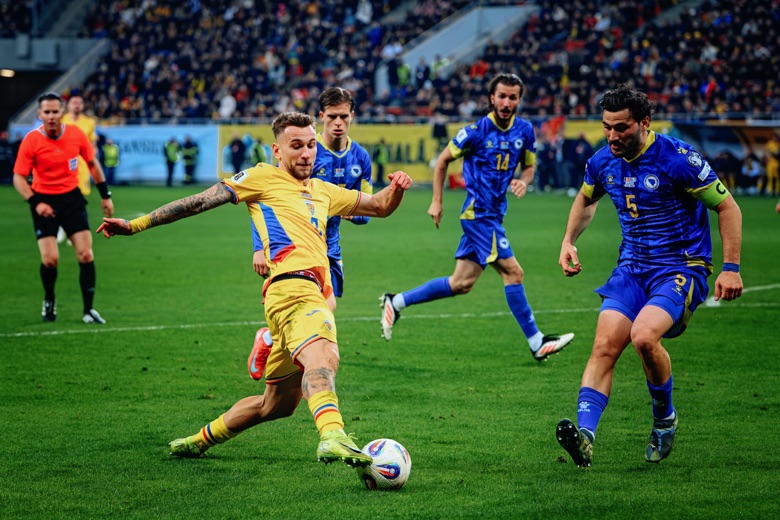
A tournament hosted by three different countries also creates the possibility of another burden: long distance travel. Bosnia-Herzegovina will play three group games in 12 days: the first in Toronto, the next in Los Angeles and the third in Seattle.
It takes around five hours on a plane to make the 4,000km trip from Toronto to LA, with a further three hours of air travel to make the near 2,000km journey to Seattle. If they finish third in Group B as predicted, Bosnia-Herzegovina would then have five days of recovery and travel before playing their Round of 32 game in Houston – the Texan city, around four hours away from Seattle by air, that is also in a completely different timezone.
FIFA have already announced the hosts for the 2030 World Cup: Spain, Portugal and Morocco, with games also to be played in Uruguay, Argentina and Paraguay. It seems that the players have just got to get used to travelling across timezones and continents if they want to be successful at the World Cup…
