
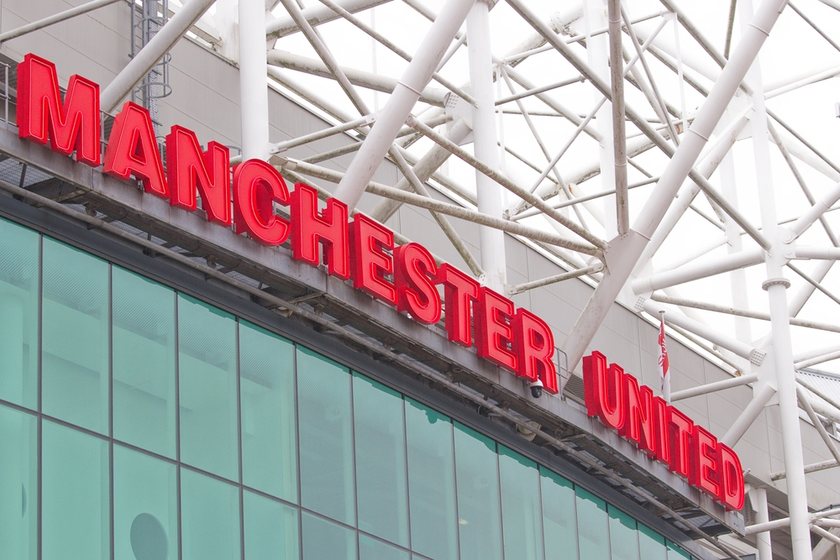
Manchester United has long been one of the most commercially successful football clubs on the planet.
Their fanbase covers all four corners of the globe, with United shirts and merch some of the biggest sellers in world football.
But even so, the revenues generated are only taking the edge off a consistent run of catastrophic financial results.
The Red Devils have released their annual report for the 2025/26 season… and it does not make for fun reading for fans of the club. All told, United posted a net loss of £43 million for the campaign – the seventh successive year in which they’ve been ran at a loss.
For a chunk of that time, such losses have been mitigated in-house; allowing the club’s head coach, whoever that was at the time, to continue spending lavishly in the transfer market.
But it seems as though the bells are finally tolling for United, given that their spending in the summer transfer window of 2026 – a total outlay of £155 million – was considerably down on previous year’s excesses.
Indeed, Chelsea forked out £117 million on just one player.
The situation on the balance sheet is so grim that the club has even turned to selling clods of Old Trafford turf to make a few quid. So, are we about to see a major downturn in Manchester United’s fortunes… based upon a lack of fortune in their bank account?
United’s Financial Report 2025/26

The £43 million loss was not inconsequential, as it marks the club’s seventh consecutive year in the red – and it’s up £10 million from the £33 million loss posted in 2024/25.
All told, United are £444 million in the hole since 2019.
Some of that £43 million can be attributed to one-off outlays, such as the compensation paid for sacking Ruben Amorim – that cost the Red Devils some £16.7 million.
And the spectre of the Glazer family continues to loom over Old Trafford. They saddled the club with debt when acquiring the keys in 2005, with an annual interest payment on the leveraged borrowing now being paid – another chunky outlay that yields no benefit to Manchester United.
One area of spending that should benefit the club long term is the acquisition of land adjacent to Old Trafford. That parcel has set United back £63.5 million, but should – in theory – pay for itself once the proposed 100,000 capacity new stadium is open for business.
When that will be remains to be seen. The overall cost of the project could reach £2 billion, with the government showing little enthusiasm for Jim Ratcliffe’s ‘Wembley of the north’ vision – they will not offer any financial help towards the cost of the build.
But perhaps it’s not all bad news. United posted record revenues of £677.6 million in 2025/26, which confirms just how valued they are as a commercial entity. And operating profits reached £22.6 million, which again is a sign of positivity despite those being offset by the losses mentioned.
There could be further improvements as the club re-enters the Champions League, which is a guaranteed money-spinner, while new sponsorship agreements with Betway and SumUp will bring in around £42 million per season.
Grass Misconduct
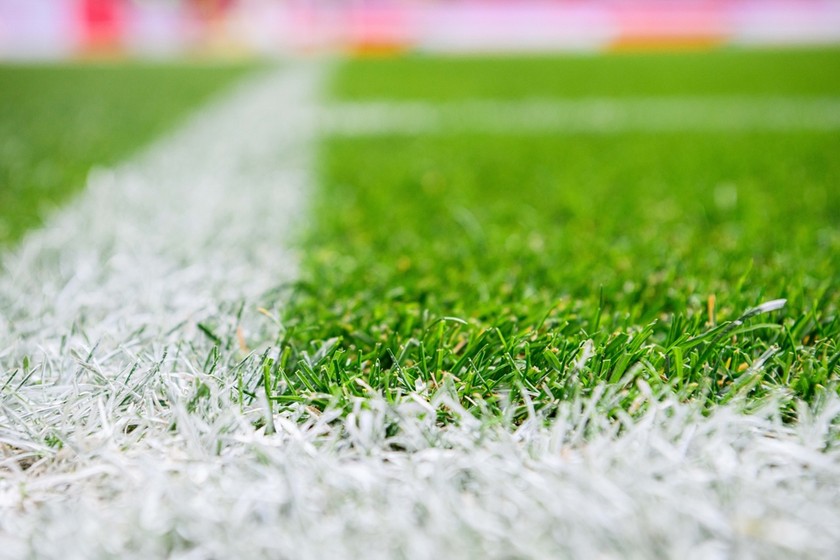
When times are tough, any opportunity to make a few quid should be considered.
Which perhaps explains why United’s hierarchy have now begun selling clumps of the Old Trafford pitch, which was re-laid in the summer of 2026.
It was the first time in more than a decade that the surface had been replaced, with United fans able to purchase a 7cm-by-7cm square of the old grass for a mere £125 a turn.
The turf is presented inside a glass cube with a black presentation case. A spokesperson for the club commented that the grass offers a ‘priceless memento of iconic games played at home and keeps the memories of matchdays alive.’
As daft as the idea seems, United aren’t the first club to sell off chunks of their pitch. Barcelona did the same when the Camp Nou surface was re-laid in 2023, although their clods of earth retailed at approximately half the cost of the Old Trafford squares.
Either way, the first batch has already sold out, so maybe there’s something in it after all…
United’s Lacklustre Summer Spending
In recent years, relentless transfer spending has been the order of the day; but new rules on how football finances are managed have caused a sea-change in thinking – now, being sustainable is considered a competitive advantage.
Manchester United’s chief executive, Omar Berrada, hinted as much in an earnings call to investors in September. When analysing the club’s relatively low summer spend – just £155 million was forked out on Youri Tielemans, Carlos Baleba and co – Berrada noted that senior officials had ‘financial sustainability in mind’ when sealing the deals.
From possibility to reality. pic.twitter.com/dUvYvGfX9n
— Manchester United (@ManUtd) July 14, 2026
For context, two promoted teams – Ipswich Town (£185 million) and Hull City (£150 million) – spent either more or essentially the same as United on new players.
As a side effect, their wage bill has dropped accordingly – by some 3.6% in fact. They now spend considerably less on salaries than their ‘big six’ rivals in the Premier League.
You’ll hear the phrase ‘squad cost ratio’ a lot in the seasons ahead. This is the new calculation, replacing PSR, that governs how much football clubs can spend on squad costs, i.e. transfer fees, wages, agent payments etc.
The Premier League and UEFA will use different parameters, with the EPL opting for an 85% squad cost ratio calculation. The suggestion is that United will be able to easily meet that, given their ability to reel in football-related revenues.
The challenge, however, will come in the Champions League. UEFA’s squad cost calculation is just 70%, down 15% on the Premier League’s, which means that United and their English counterparts will need to be mindful to adhere to continental competition rules.
The squad cost rules in UEFA competitions only allows for three-year losses of a combined £52 million; at the time of writing, United are operating far beyond that level.
In modern football, sustainability is often a codeword for cutting costs. It’s something that Manchester United fans may just have to get used to…
