
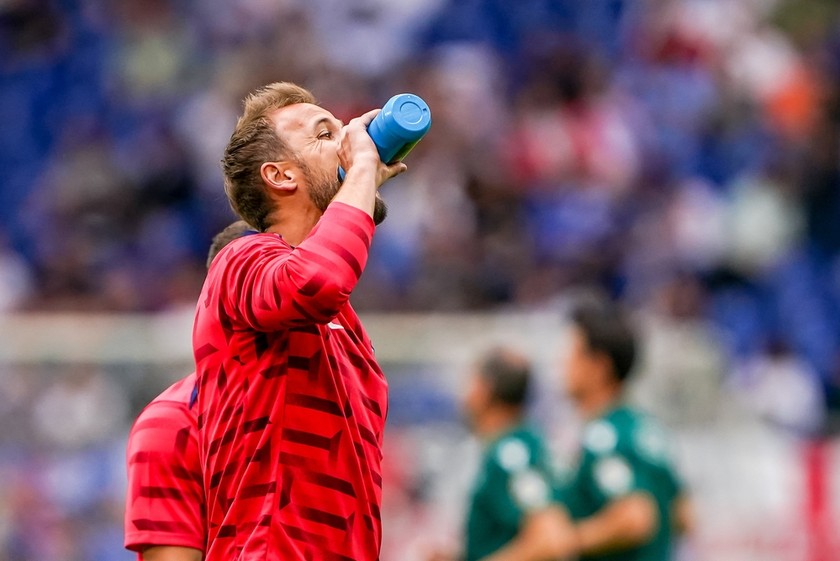
Anyone that has watched an NFL game on TV will be familiar with the exciting action out on the grass… as well as the mind-numbing tedium of the relentless ad breaks that greet each stoppage in play.
Give the United States a football World Cup and it’s no surprise that they have followed suit there, aided and abetted by FIFA president Gianni Infantino’s love of cold, hard commercialism.
Players, coaches and pundits are in agreement: the ‘hydration breaks’, which take place whether it’s a hot day or not, are bad for football.
But Infantino disagrees… and ultimately he plays a key role as the gatekeeper of the beautiful game – for better or worse.
Given that hydration breaks are an opportunity to make some money, it’s little wonder that fans are concerned that these stoppages could be heading to the Premier League as an easy cash grab.
So will EPL chiefs resist the urge to follow suit?
Hydrated Ad Breaks

A hydration break is simply designed to allow players to take on fluids on hot gamedays, with the hiatus typically coming at the mid-point of each half.
In the past, they have been enacted when the temperature inside the stadium reaches a specific threshold, or if the referee feels that a break is warranted.
However, at the World Cup, hydration breaks have been mandated – come rain or come shine. And that’s why so many are cynical that they are simply a money-making exercise for FIFA.
The governing body has claimed that the breaks are designed to prioritise player welfare, with a three-minute stoppage to allow them to take fluid and/or tactical instructions on board.
And if FIFA are able to monetise the situation? Well, why not, would be their argument.
UK broadcasters have chosen not to go to an advert break, instead relying on their pundits to provide analysis to fill the content gap. But overseas, big name brands have spent considerable sums to promote their wares to a sizable audience… nearly £200 million in the US alone, in fact.
Infantino has claimed that FIFA don’t make any additional revenue from ad breaks. “This is not a financial issue for us. For us, it is purely a sporting matter,” he has said. Where the money goes then is anybody’s guess.
🗣 “It’s sort of changing the game!” 👀
What’s your view on the hydration breaks at the World Cup? 🫗 pic.twitter.com/qVolTrPkba
— Match of the Day (@BBCMOTD) June 16, 2026
While nobody would argue with players taking on water on a hot day, the transformation of football into a game of four quarters – very NFL-esque – rather than two halves has had a tactical bearing on matches.
ITV pundit and former England head coach Emma Hayes has described them as ‘momentum breaks’, with the team under the cosh prior to the stoppage often coming out refreshed and remodelled after.
Sweden boss Graham Potter switched to a back four during the first hydration break against the Netherlands, which enabled his side to temporarily change the nature of the contest – they had eight shots at goal in the 23 minutes thereafter until half time.
Switzerland head coach Murat Yakin purposely waited until the hydration break to make a triple substitution in his team’s win over Bosnia-Herzegovina, revealing that he knew their opponents wouldn’t be able to react immediately to the changes.
Did it work? Did it ever. One of the subs, Johan Manzambi, scored twice, while another – Ruben Vargas – scored and assisted another.
“Maybe the coach can reassess certain situations, correct certain mistakes. Well, is that bad, necessarily? Maybe it’s good,” commented Infantino.
What Players and Coaches Have Said About Hydration Breaks
It’s consensus that hydration breaks are bad for TV viewers. But what do the players, coaches and those within the game think?
It’s a mixed bag. England boss Thomas Tuchel has commented: “I think that it interrupts and changes the identity of a football match much more than I thought.
“It breaks the match almost in four quarters. And I think it changes the characteristic of the match more than I thought.”
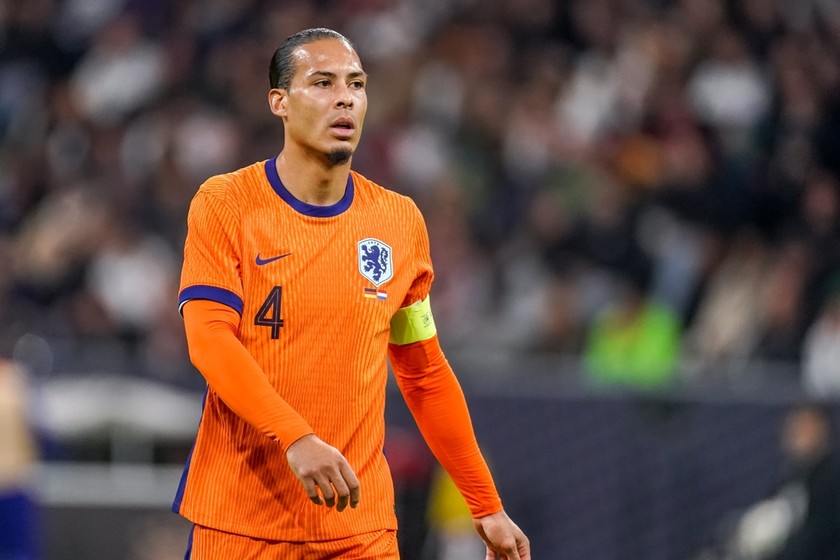
In his own inimitable style, Uruguay head coach Marcelo Bielsa has claimed that the breaks in play ‘add nothing and take away a lot’, while Netherlands and Liverpool captain Virgil van Dijk is quoted as calling the hydration hiatus ‘not great’.
Mind you, there those in favour of the polarising stoppage in play. France manager Didier Deschamps said: “These breaks for three minutes, you can get the players close to you, and this gives you an opportunity to adjust a couple of things as regards the 22-23 minutes of game that just took place.”
Belgium head coach Rudi Garcia agreed that the breaks are a useful tool from a tactical standpoint. “For me, it’s a coaching break more than a cooling break, so to me it’s very important. For me, it’s a very good thing.”
And even former Liverpool chief Jurgen Klopp has weighed in. “When you’re in the stadium, it’s okay because you get a little bit of a show. In Dallas, they had the cheerleaders on the big screen, which I enjoyed.
“But at my age, it’s a welcome break to go to the toilet!”
Hydration Breaks in the Premier League
Rio Ferdinand has suggested that hydration breaks could be heading to the Premier League ‘because it’s more money.’
“They’re going to look at it: ‘Let’s dig into it and find out how much more money came into the World Cup, to FIFA, just on these breaks.”
But opposition has come from UEFA, who are growing into their role as FIFA’s chief nemesis. As the backlash over hydration breaks at the World Cup grows, European football’s governing body has taken the opportunity to score a PR win.
They have confirmed already that hydration breaks won’t be introduced at EURO 2028 unless temperatures reach 32 degrees on match day, which is their existing policy.
No comment has been forthcoming from the Premier League as yet. They do have a hydration break policy in place, but that’s only when in-stadium temperature exceeds 30 degrees.
That’s rarely exercised, with the final day of the 2025/26 season one of the few times that a hydration break has been enforced in the EPL.
Hopefully, many fans will agree, the Premier League doesn’t take yet another opportunity to cash in on the beautiful game by making them mandatory.
