
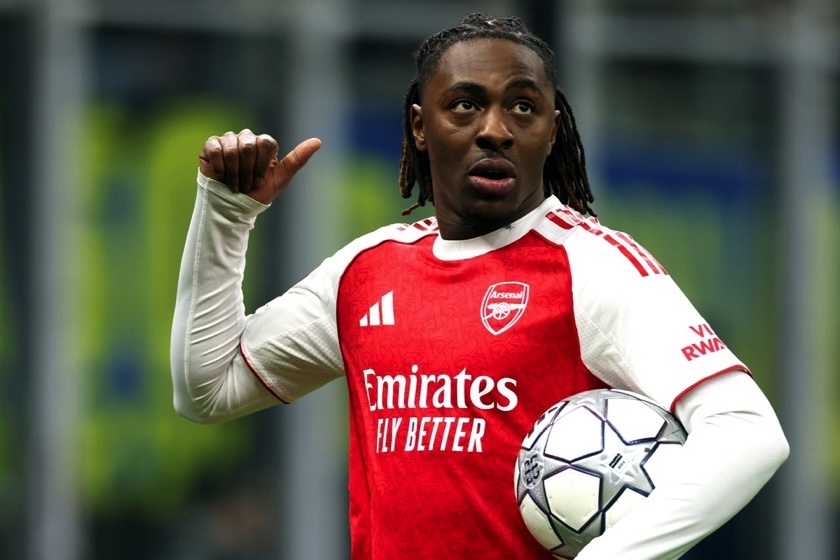
Two cup finals and a Premier League title… now that’s some season for Arsenal. They ended a 22-year wait to get their hands on the EPL trophy after fighting off a late surge from Manchester City, securing a place in the Premier League hall-of-fame. But just as importantly, given how money-orientated modern football is, the Gunners will also be coining it in.
Allied to the uptick in commercial revenue that comes with being champions, Arsenal will bank almost £200 million from the season in prize money, broadcast revenue and other payments. With the introduction of Squad Cost Ratio (SCR) for the 2026/27 season, which replaces the previous Profit & Sustainability Rules (PSR), making money off the pitch has never been so important in helping to improve on it.
What Is the Prize Money for the Premier League?
Arsenal’s first Premier League title for over two decades is expected to generate almost £200 million in domestic prize money.
Calculations undertaken by The Athletic, based upon information provided by various club sources across the division, project that the Premier League… pic.twitter.com/85tX1RKMA3
— The Athletic | Football (@TheAthleticFC) May 24, 2026
The prize money and other revenues dished out by the Premier League to its member clubs in 2025/26 is set to reach a record high. More than £3 billion will be distributed, pushing the EPL beyond that milestone figure for the first time – the previous record was £2.8 billion.
Arsenal will get the biggest slice, with £34 million in ‘merit payments’, £23.6 million in facilities fees and £31.9 million acting as the Premier League’s equal share for each of its member clubs. There’s also the equal share and merit payments from continental football, as well as the central commercial payout of £11.5 million that all Premier League clubs will get.
All told, that comes to £198.7 million; a new record for the highest amount earned by a single club in an EPL campaign – and £23 million more than Liverpool got when they won the title in 2024/25. The scale of the payout has been enhanced by a rise in merit payments, which essentially is prize money based upon where you finish – each place higher in the table equating to around £3.76 million, which is an extra million on top of 2024/25’s earnings.
Arsenal’s finances have been bolstered by some £75 million from their Premier League and Champions League heroics, which at least confirms that English football’s top-flight remains a meritocracy of sorts.
Rounding out the top five earners from 2025/26 were:
- #2 – Manchester City (£192.5 million)
- #3 – Manchester United (£191.5 million)
- #4 – Aston Villa (£182.6 million)
- #5 – Liverpool (£181.8 million)
At the other end of the table, relegation will have felt like a cruel blow to West Ham, Burnley and Wolves. They will at least bank the parachute payments that Premier League clubs take with them into the Championship, as well as the handouts from the money-spinning 2025/26 season.
West Ham banked £128.6 million across the various revenue streams, with Burnley (£118.1 million) and Wolves (£117.1 million) able to achieve stability on their spreadsheets, if not on the pitch. And as if to highlight how important it is to fight for every point on the pitch, just two points separated Sunderland in seventh and Fulham in eleventh in the final league table.
Yet the different in prize money and other revenue streams was such that Sunderland earned £13 million more than Fulham; a considerable sum that could make a real difference to their transfer spending in the summer.
And Burnley’s equaliser against Wolves on the final day of the season ensured they finished above the Midlanders… a draw that effectively netted them £3.8 million more in EPL contributions than had they lost the game.
How Does Squad Cost Ratio Work?

In football’s new financial age, every penny counts. It was back in November 2025 that Premier League clubs voted to introduce Squad Cost Ratio (SCR) as the chosen method of limiting spending – replacing the controversial PSR that came before it.
What is Squad Cost Ratio? In a nutshell, as of the 2026/27 season Premier League clubs will be able to spend up to 85% of their revenue and net profit/loss from player sales. The items that the pot of money can be spent on include:
- Player wages
- Manager wages
- Agent fees
- Transfer fee amortisation
Other members of staff, such as coaches and analysts, are exempt from the SCR calculation. SCR is similarly aligned to UEFA’s spending rules, which will bring more uniformity between Premier League clubs and the rest of Europe’s ‘big five’ divisions.
Will Squad Cost Ratio Work?
The idea is to make football finances more sustainable, by ensuring that clubs are making more money each season than they’re paying out. The SCR calculation also encourages balance between transfer fees paid and received; obviously, a net loss on purchases impacts how much can be spent the following season.
In a utopian world, Squad Cost Ratio would also close the gap between the haves and the have nots, but in reality that isn’t likely to happen. If we use the data published earlier, Arsenal’s Premier League payout was nearly £200 million – which is around £50 million more than those who finished in mid-table.
Factor in other revenue streams that the big clubs have in terms of matchday receipts, sponsorships and commercial partnerships, and you can see why the Squad Cost Ratio calculation of an Arsenal or a Crystal Palace is going to be considerably different to that of a Leeds United or an Everton.
Not only that, clubs are allowed to use profits generated from hosting events at their stadium – such as live music or NFL games – as part of their revenue math… something that’s only available to a small handful with suitable venues.
Under SCR rules, there’s a chance that the rich will get richer – and more successful, while the less financially fortunate will be left eating their dust once again. EPL chiefs reckon:
The Premier League is introducing the SCR system to promote the opportunity for all of its clubs to aspire to greater success, while protecting the competitive balance and compelling nature of the league.
